WATERPROOFING • HYDERABAD

Waterproofing & Leakage Solutions in Hyderabad

Find the source of the problem before choosing the repair.

Waterproofing for terraces, bathrooms, balconies, homes and commercial properties, with the renovation approach based on the actual source and condition of the problem.
Discuss My Leakage Problem WhatsApp Us Request an Assessment
Source-First Technical Diagnosis Terrace, Bathroom, Balcony & Wall Treatment Post-Leakage Repair & Civil Restoration
Professional waterproofing membrane preparation and leakage inspection in Hyderabad Concept visual, not client work
Waterproofing Scope: Residential Homes • Villas • Apartments • Commercial Properties
Engineering Role: Waterproofing as Part of Professional Renovation & Repair
Direct Desk: Miss Tripura Sundari +91 86882 44300
Core Fundamentals (Section 07)

What is Waterproofing?

Waterproofing is the systematic engineering process intended to reduce or prevent unwanted water penetration into parts of a building where moisture causes structural deterioration, plaster flaking, electrical shorts, and foul mold growth.

In building renovation, waterproofing involves far more than simply painting a chemical coating over a wet surface. Depending on the property, it requires addressing terraces exposed to heavy monsoon rains, sunken bathroom slabs subjected to continuous hot and cold water, balconies vulnerable to pooling runoff, external walls battered by driving wind, and plumbing service shafts.

The correct waterproofing approach depends on identifying the actual source and existing condition. Applying a waterproof coating on the inside of a room while water continues entering from a terrace crack or leaking pipe above will only trap moisture inside the masonry and cause widespread delamination.

️ Professional Engineering Notice: NO UNIVERSAL CHEMICAL SHORTCUTS

Renovation Hyderabad approaches waterproofing as an integral discipline within property renovation and structural repair. We are not chemical sales agents, and we never promise that one product or single coat solves every leakage problem. Every moisture issue requires verifying water sources, drainage slopes, plumbing integrity, and substrate condition before applying the barrier system.

Technical Differentiation (Sections 08 & 09)

Waterproofing, Leakage Repair & Why Buildings Leak

Understanding how water moves through masonry helps property owners make permanent repairs rather than spending money on recurring seasonal patches.

Preventative Barrier

Waterproofing

Focuses on creating a durable, elastomeric, continuous barrier across an entire surface (such as a terrace, bathroom sunken slab, or balcony) to resist water exposure over time.

Surgical Intervention

Leakage Repair

Focuses on identifying and neutralizing a specific active leak—such as a cracked plumbing elbow, a leaking shower trap collar, or a failed expansion joint.

Complete Restoration

Water-Related Renovation

Restoring the property once the leak is eliminated: replacing damaged tiles, repairing hollow plaster, replumbing lines, adjusting drainage slopes, and repainting.

Diagnostic Imperative

Water follows the path of least resistance through micro-cracks and honeycombed concrete. A damp patch on a ground-floor living room ceiling may originate 10 feet away from an unsealed bathroom shower pipe. The cause must be assessed before selecting the repair method.

Signature Diagnostic Explorer (Section 34)

Find the Source — Interactive Building Diagnostic Guide

Select any building zone below (or use arrow keys) to explore possible water ingress categories and what must be inspected during an assessment.

01 • TERRACE & ROOF LEVEL MOISTURE

Terrace Slabs, Rainwater Outlets & Parapet Joints

Terraces endure extreme heat expansion and torrential monsoon rains. Rainwater pooling from insufficient slopes, cracked parapet wall coping, or debonded old bitumen/elastomeric membranes allows water to soak into structural roof slabs, causing ceiling stains in top-floor rooms.

WHAT NEEDS PHYSICAL INSPECTION:
Checking drainage fall slopes, rainwater pipe mouth sealing, parapet cove fillets, tile joint porosity, and previous patch layers.
Connected Scope

Connects directly with Terrace Renovation, Parapet Repairs, and Roof Drainage.

Important Note: Selecting a zone in this diagram provides educational guidance on potential problem areas. It does not replace an on-site physical inspection by an experienced renovation engineer.

Roof & Slab Protection (Sections 10 & 15)

Terrace Waterproofing & Leakage Repair

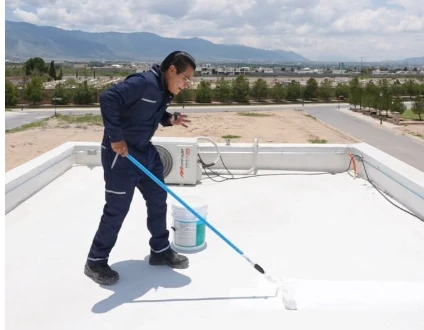
Terraces represent the primary defense shield against Hyderabad monsoon downpours and intense summer solar radiation. Effective terrace waterproofing combines slope correction, crack routing, and elastomeric membrane systems.

  • Surface Preparation: Grinding away deteriorated lime terrace layers or peeling coatings down to solid concrete before applying new barriers.
  • Rainwater Drainage Correction: Adjusting floor screed gradients so water never ponds around parapet bases or blocked drain mouths.
  • Elastomeric Multi-Layer Coating: Applying high-build, UV-stable polymer coatings with embedded fiberglass mesh over structural cracks and expansion joints.
Discuss My Terrace Leakage Explore Terrace Renovation →
Terrace waterproofing and leakage diagnosis in Hyderabad Concept visual, not client work
Wet Zones & Thresholds (Sections 11, 12 & 14)

Bathroom & Balcony Waterproofing

Bathrooms and balconies require continuous sub-floor membrane sealing. Applying sealant over existing tiles rarely solves internal dampness wicking beneath tile beds.
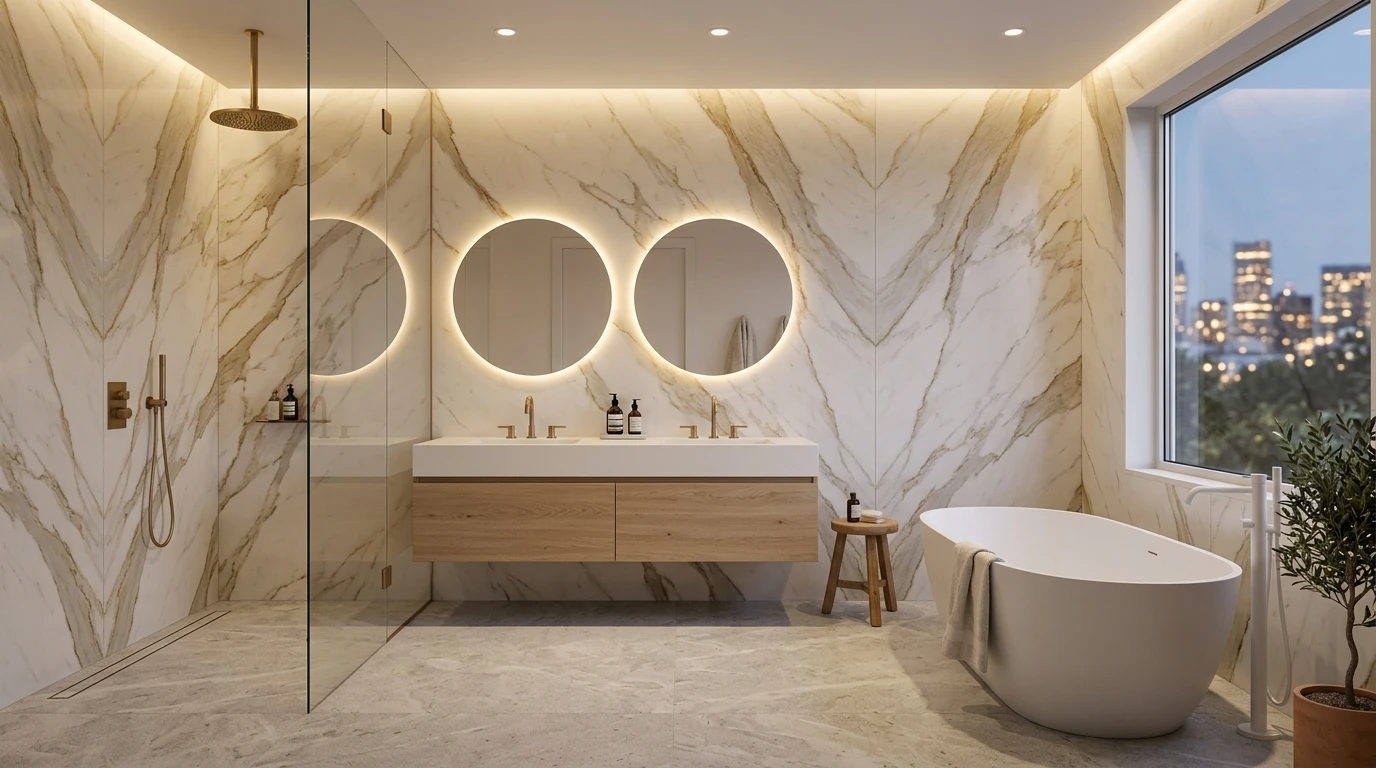
  • Sunken Slab Waterproofing: Polymer-modified cementitious coatings applied across bathroom sunken slabs with curved cove fillets up to 300mm on dry walls and 2100mm inside showers.
  • Pipe Penetration Collar Sealing: Treating annular spaces around drainage waste pipes with polyurethane sealants to prevent downward leakage.
  • Balcony Threshold Protection: Installing raised granite water-stops beneath balcony door frames to prevent driving rain entering bedroom floors.
Discuss Bathroom Waterproofing View Bathroom Renovation →
Bathroom sub-floor waterproofing and pipe collar sealing in Hyderabad Concept visual, not client work
Masonry & Facade Health (Section 13)

Wall Damp, Moisture & Water Seepage

Treating damp walls requires eliminating the moisture source rather than repeatedly repainting over bubbling plaster.

External Facade Cracks

Rainwater driving into hairline plaster cracks on exterior building elevations, soaking brickwork and emerging as peeling paint and salt stains on internal living room walls.

Concealed Plumbing Seepage

Slow pinhole leaks or joint fractures in concealed internal water supply pipes inside bathroom or kitchen walls, continually feeding moisture into adjacent bedroom partitions.

Rising Capillary Dampness

Ground-level soil moisture wicking upward through foundation plinths where the original damp-proof course (DPC) has failed or ground levels have been raised by road paving.

Discuss Wall Damp with Our Engineers
Property Contexts (Sections 16–18)

Residential & Commercial Waterproofing Solutions

Waterproofing requirements vary depending on whether you are protecting a family villa terrace in Kokapet, an apartment in Gachibowli, or a high-traffic commercial building in Madhapur.

Independent Houses & Villas

Residential Home & Villa Waterproofing

Comprehensive protection for rooftop terraces, master bathrooms, cantilevered balconies, external parapet walls, and basement parking zones.

Explore Villa Renovation →
Gated Communities

Apartment & Flat Waterproofing

Resolving ceiling dampness below upper-floor bathrooms, service duct pipe leakage, utility balcony drainage, and coordinating repairs within society guidelines.

Explore Apartment Renovation →
Offices & Clinics

Commercial Facility Waterproofing

High-traffic commercial restrooms, office pantry drainage, commercial rooftop maintenance, and water storage tank rehabilitation in Hyderabad.

View Commercial Services →
Heavy Restrooms

Commercial Bathroom Waterproofing

Heavy-duty multi-layer elastomeric membranes, high-volume floor traps, and chemical-resistant epoxy grouts designed for continuous daily janitorial washing.

Discuss Commercial Facilities
Strategic Decision Framework (Sections 19 & 20)

What If Old Waterproofing Has Failed? Should You Repair or Renew?

When an existing waterproofing coating fails repeatedly, applying another layer on top only traps moisture inside saturated screeds.

When Localized Repair Works

Suitable when leakage is confined to a visible joint, a damaged rainwater pipe mouth, or a cracked parapet cove while the surrounding membrane remains firmly bonded and elastic.

When Full Renewal is Required

Necessary when the existing membrane has peeled, turned brittle from UV exposure, or when multiple leaks occur across different rooms—requiring complete substrate stripping and re-application.

Waterproofing in Larger Renovation

Timing waterproofing during complete home, terrace, or bathroom renovation ensures tiles, plumbing lines, and finishes are installed seamlessly over verified leak-proof substrates.

Methodical Protocol (Section 22)

The 8-Stage Waterproofing & Leakage Process

A disciplined, engineer-supervised workflow ensuring root causes are eliminated before protective barriers and finishes are applied.

01

Identify

Understand the reported moisture symptoms, leakage frequency, and rain or plumbing patterns.

02

Inspect

Physical inspection of terrace slopes, parapets, pipe joints, floor traps, and surrounding areas.

03

Trace

Trace water migration paths rather than assuming the surface stain is the true entry point.

04

Scope

Define the exact repair method, barrier system, and post-leakage civil work in a written BOQ.

05

Prepare

Mechanically clean surfaces, rout and pack cracks, build corner fillets, and seal pipe collars.

06

Execute

Apply specified polymer or elastomeric waterproofing layers in cross coats with proper curing.

07

Test

Conduct 48-hour standing water ponding tests to verify complete barrier integrity before screeding.

08

Finish

Apply protective screed, tiling, or paint finishes and complete the final client walkthrough.

Technical Rigor (Sections 23–25)

Why Proper Assessment Matters & How Materials are Selected

Photographs sent over mobile apps cannot measure floor slopes, hidden cavity dampness, hollow plaster debonding, or internal pipe pressure. A physical on-site assessment by an experienced renovation supervisor is essential.

  • Material Compatibility: Selecting polymer cementitious coatings, elastomeric acrylics, or polyurethane systems based on UV exposure, traffic, and thermal movement.
  • Verified Brand Specifications: Where proven material brands (such as Dr. Fixit or Fosroc systems) are specified in a project BOQ, Renovation Hyderabad applies them strictly according to technical manufacturer data sheets.
  • No Commercial Exaggerations: We do not claim authorized dealership or exclusive partnerships; we operate as an independent, quality-focused renovation contractor.
Request an On-Site Assessment
Waterproofing site inspection and material selection in Hyderabad Concept visual, not client work
Authenticity & Evidence (Section 26)

Waterproofing & Leakage Project Stories

Real residential and commercial waterproofing projects carried out across Hyderabad.

DATA NOT AVAILABLE — Client Project Documentation Pending Publication Approval

Verified Waterproofing References Available on Consultation

In accordance with our strict non-fabrication standard, we never display fake project scope photos or stock laboratory graphics as completed projects. Genuine client project photographs, diagnostic reports, and scope details can be reviewed directly during consultation with Miss Tripura Sundari.

Discuss Waterproofing Projects on WhatsApp
Cost Drivers & Differentiators (Sections 27 & 28)

What Affects Waterproofing Cost?

We do not publish misleading flat per-square-foot rates because addressing a single roof drain leak costs far less than stripping a saturated 2,000 sq ft terrace screed.

1. Area & Substrate Accessibility

Total square footage, height clearance, and whether solar panels, water tanks, or HVAC outdoor units require protection or temporary shifting.

2. Surface Preparation & Demolition

Whether the surface can be pressure-washed and patched, or requires chipping away failed lime screeds down to bare concrete.

3. Barrier System & Reinforcement

Two-coat polymer cementitious barriers versus multi-layer elastomeric polyurethane systems reinforced with continuous fiberglass mesh.

4. Post-Waterproofing Restoration

Protective screeds, re-tiling, wall plaster restoration, and painting finishes required to return the space to pristine living condition.

Why Choose Renovation Hyderabad for Waterproofing?

Because we handle the whole renovation cycle. When a chemical-only contractor finishes applying a coating, they leave you to find separate masons, plumbers, and painters. Renovation Hyderabad provides end-to-end diagnosis, waterproofing application, civil repairs, and surface finishes under one accountable management team.

Hyderabad Service Coverage: Coordinated from Plot 42, Road No. 3, Banjara Hills across Jubilee Hills, Banjara Hills, Gachibowli, Madhapur, Kondapur, Kokapet, Manikonda, Secunderabad, and surrounding neighborhoods.

Request an Itemized Waterproofing Assessment
Customer FAQ (Section 30)

Waterproofing & Leakage Repair FAQs

Clear, practical answers to common questions about water leakage, waterproofing systems, and building moisture in Hyderabad.

1. What is waterproofing?
Waterproofing is the process of applying specialized barrier coatings, drainage slopes, and flexible joint sealants to building slabs, walls, and wet areas to prevent water from penetrating into structural concrete and interior living spaces.
2. Why is my terrace leaking?
Terrace leakage is commonly caused by surface cracks from thermal expansion, poor drainage slopes causing standing water, failed parapet joint fillets, or blocked drain outlets that force water to seep through porous concrete.
3. Why is my bathroom leaking?
Bathroom leakage usually stems from failed sub-floor waterproofing, degraded tile grout, unsealed drainage pipe collars passing through the slab, or micro-cracks in concealed plumbing lines.
4. What causes wall dampness and peeling paint?
Wall dampness can be caused by external rainwater entering exterior facade cracks, plumbing leaks inside wall cavities, rising ground moisture, or moisture wicking from adjacent un-waterproofed bathrooms.
5. Can old waterproofing be repaired?
Yes, if the problem is confined to a localized section, expansion joint, or drain mouth. If the existing coating has turned brittle and peeled across the whole slab, full renewal is recommended.
6. Should old waterproofing be completely replaced?
When water has penetrated beneath old layers and created hollow, debonded patches across the slab, stripping the failed coating is necessary to allow the fresh barrier to bond directly to sound concrete.
7. Can you waterproof a terrace without removing existing tiles?
Transparent PU coatings or deep-penetrating sealants can be applied over un-cracked tiles as a maintenance step. However, if water has already accumulated under the tiles, removing them down to the screed provides a far more permanent barrier.
8. Can you waterproof a bathroom without breaking tiles?
Epoxy re-grouting and pipe collar sealing can resolve minor joint leaks. However, if the sub-floor waterproofing membrane beneath the tiles has failed, permanent resolution requires lifting floor tiles to re-waterproof the slab.
9. Can you waterproof a balcony?
Yes. Balcony waterproofing involves sealing the floor screed, correcting slope gradients toward drain outlets, applying corner fillets along parapets, and installing raised stone water-stops at door thresholds.
10. Do you repair active water leaks?
Yes. We diagnose and repair active leaks originating from damaged plumbing pipes, cracked rainwater channels, compromised roof joints, and floor drains.
11. Do you handle plumbing-related leakage?
Yes. Our in-house plumbing crew handles pipe pressure testing, replacing broken concealed CPVC/GI lines, repairing diverter joints, and fixing leaking toilet flush connections.
12. Do you handle drainage slope issues?
Yes. Correcting drainage gradients is critical. Standing water will eventually degrade even high-grade coatings. We re-screed surfaces to ensure rapid, natural water runoff.
13. Do you provide commercial waterproofing?
Yes. We handle commercial terraces, office restrooms, clinical facility wet zones, utility areas, and commercial building facades across Hyderabad.
14. Do you provide commercial bathroom waterproofing?
Yes. We apply heavy-duty multi-layer elastomeric coatings and high-abrasion epoxy grouts designed to withstand high daily foot traffic and aggressive janitorial washing.
15. Can waterproofing be part of a larger home renovation?
Yes. Coordinating waterproofing during a complete home, villa, or bathroom renovation ensures tiles, cabinets, and painted finishes are applied only over verified leak-free substrates.
16. What affects waterproofing cost?
Cost is determined by square footage, substrate accessibility, extent of demolition required, type of membrane system (cementitious, PU, or bituminous), drainage slope work, and post-waterproofing finishes.
17. How long does a waterproofing project take?
Timelines depend on the area and curing requirements. Surface preparation, multi-layer coating application, and the mandatory 48-hour water ponding test typically take 4 to 8 working days.
18. Can waterproofing stop every leak?
Waterproofing stops leaks when the true water entry path is identified and properly sealed. If an underlying plumbing burst is not repaired first, surface coatings will fail. Proper physical diagnosis is essential.
Direct Engineering Desk (Sections 36 & 37)

Discuss Your Waterproofing or Leakage Problem

Connect directly with Miss Tripura Sundari at our Banjara Hills desk. Tell us where moisture or leakage appears, or select "Not Sure" for an on-site physical assessment.

WhatsApp